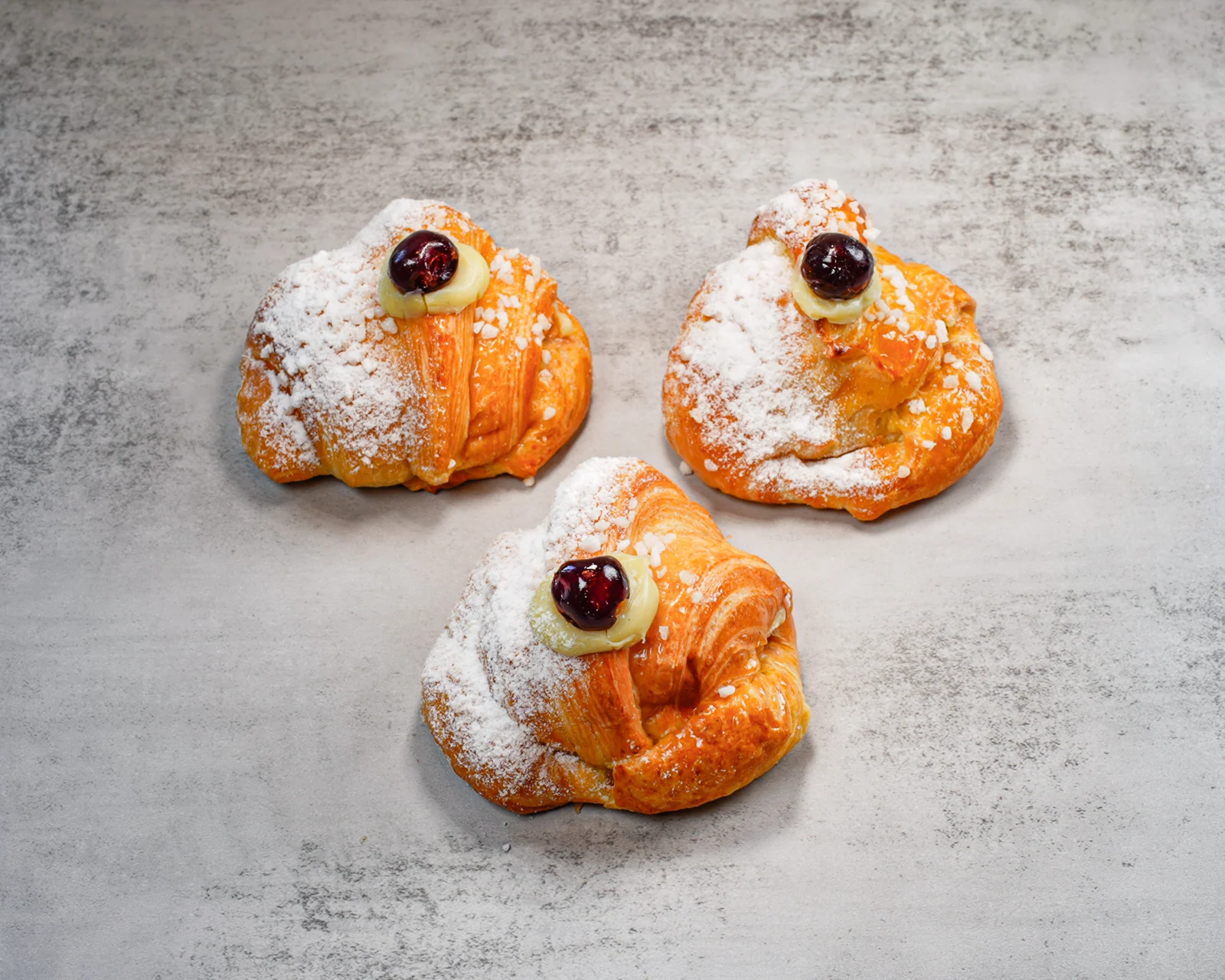
What Italians eat for breakfast is small and sweet. At home that means milky coffee with biscuits, rusks or bread and jam; at the bar it means a cornetto and a cappuccino, taken standing up in a few minutes. Savory food is the exception. In Naples the pastry might be a sfogliatella or a sugared graffa; in Sicily, in summer, granita with a brioche.
Colazione at home, the version nobody photographs
The Italian breakfast most people actually eat happens in the kitchen, and it is plain. Coffee, usually with milk. Something dry to dunk in it. A survey by the Italian consumer association Altroconsumo found that biscuits were the food home breakfasters reached for most often, about half of them regularly, followed by jams and sweet spreads, then fette biscottate: the twice-baked slices of bread, sold in packets, that most Americans would call rusks. Fresh bread came further down the list.
Almost everything on that list is built for dunking. The coffee at home is often a caffellatte, a large cup of hot milk with coffee poured in, and biscuits and rusks are made dry precisely so they can soak it up without falling apart. Bread and jam is the one item eaten as it is.
The same survey asked a simple question about taste. Among people who eat breakfast at home, 81 percent said they prefer it sweet, 16 percent mixed, and 3 percent savory. That number explains a lot. A breakfast built around a cup of milky coffee and something to soak in it does not leave room for a frying pan.
It also tells you where people eat. Most respondents had breakfast at home almost every day and went to the bar for it far less often. The cornetto at the counter, the picture on every postcard, is for many Italians the treat and not the routine.
Colazione al bar: pastry, coffee, out the door
When Italians do take breakfast out, the order barely changes. In the same Altroconsumo survey, more than two thirds of people eating at the bar had a brioche or cornetto, far ahead of every other pastry. The survey lists brioche and cornetto as one item for a reason: in much of northern Italy the crescent pastry that Naples and Rome call a cornetto is simply called a brioche, and asking for one gets you the same thing. The coffee is usually a cappuccino or an espresso. Nobody sits down for it unless they want to; the counter is the point, and the whole thing is over in about the time it takes to read the sports page.
The coffee has rules of its own, about milk and the hour of the day and what you call each drink, and we wrote them down separately in how to order Italian coffee without a misstep. The short version for breakfast is that this is the one meal where a milky drink is completely normal.
Naples and Sicily wake up differently
Regional breakfasts are where the rule bends. In Naples the shell-shaped sfogliatella is treated as a breakfast pastry as much as a dessert, with a crackle of thin layers and a ricotta filling scented with citrus. Next to it on the bakery tray you will find the graffa, a soft ring of fried dough rolled in sugar. Its name is usually traced to the Austrian Krapfen, and Neapolitan bakeries now sell it all year, not only at Carnival.
Sicily goes further. In summer the classic Sicilian breakfast is a glass of granita, almond, lemon, coffee, mulberry or pistachio, with a soft brioche on the side, often the round one topped with a little knot called the tuppo. You tear the brioche and dip it. The same brioche, split and filled with gelato, is a Sicilian summer snack in its own right.
Other regions have their own dunking traditions. In Piedmont there are paste di meliga, cornmeal biscuits made for a cup of milk or coffee; in Romagna, a plain ring cake called ciambella; in Sardinia, the large, soft sponge fingers called pistoccus. Different flours, same gesture.
All of them are still sweet. All of them still come with coffee, or with something cold in its place. The pattern holds even when the pastry changes.
What does not belong on the Italian breakfast table
Eggs, bacon, sausage, pancakes, hash browns. None of these are Italian breakfast food. To an Italian eye, a plate of eggs and meat at eight in the morning looks like lunch that arrived early.
Nor is breakfast a long meal. The mid-morning hunger that a big breakfast is meant to prevent gets handled later, with a second coffee or a snack, and then with a proper lunch. If you want to see how the rest of the day fits together, we mapped it in when Italians eat, from colazione to cena.
How to have colazione in Edgewater
We open at eight, half past on Sundays, and the bakery case is full by then because everything is baked here every morning. Order at the counter and keep it Italian: one pastry, one coffee.
For the bar version, have a Cornetto al Pistacchio, the soft, brioche-like cornetto filled with Bronte pistachio cream, with a cappuccino, which is the drink we pour most. For the Neapolitan version, swap the cornetto for a sfogliatella with its ricotta and citrus filling or a sugar-dusted Neapolitan graffa.
If you would rather compare the Italian morning with the French one, we put a cornetto and a croissant side by side in cornetto vs croissant.
We do not make granita. On a hot Miami morning the closest thing on our counter to the Sicilian habit is the Brioche col Gelato, a brioche bun filled with pistachio gelato. A Sicilian would call that a snack rather than breakfast. In August, in this city, nobody is going to check.
On our counter: pistachio coffee and Pain au Chocolat. Every dish, one by one: our dishes.