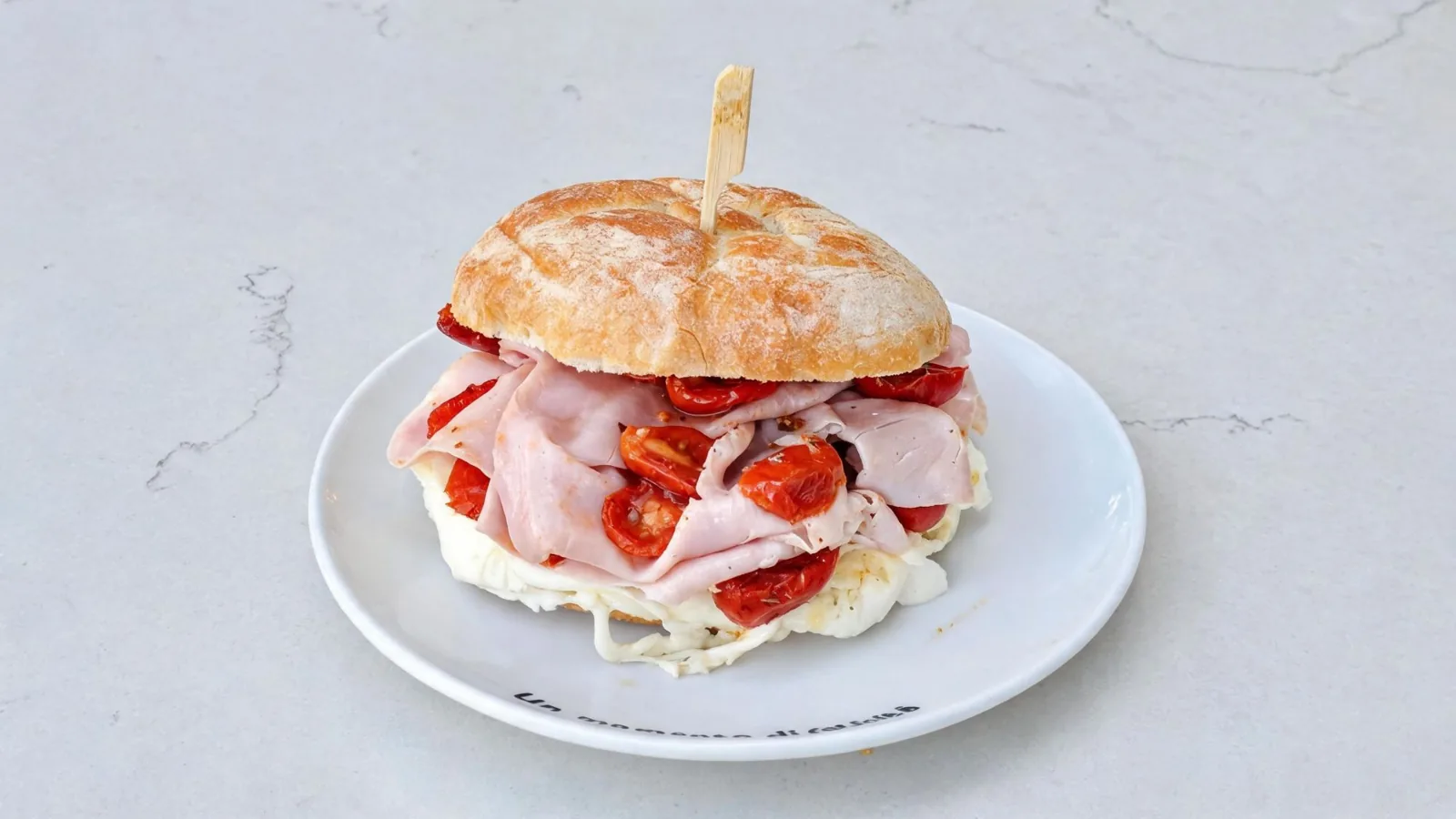
Mozzarella is a family of fresh stretched-curd cheeses. Mozzarella di Bufala Campana is made only from buffalo milk; fior di latte is mozzarella made from cow's milk; burrata is a pouch of mozzarella filled with stracciatella, shreds of curd soaked in cream, created in Andria in Puglia. Mozzarella is firmer, burrata is creamier and spills when cut.
Mozzarella di bufala: buffalo milk only
The protected buffalo mozzarella is Mozzarella di Bufala Campana, a protected designation of origin since 1996. Its consortium says no other mozzarella made solely from buffalo milk holds that status, and that the fresh milk must be turned into cheese within 60 hours. The production area covers parts of four regions in southern and central Italy.
Treccani's definition of mozzarella describes it as a cheese typical of Campania, originally made only from buffalo milk. The curd is cut, drained, left to mature for a few hours, then dipped in water at 80 to 90°C and worked until it forms a smooth, stretchy strand that is shaped by hand or machine. The word itself is a southern diminutive of mozza, an older name for this kind of cheese. Outside its protected area, the buffalo version has to call itself mozzarella of buffalo milk rather than use the Campania name.
Buffalo milk is richer than cow's milk, and you can taste it: the cheese is softer, wetter and tangier, and it releases milky liquid when you cut it. That is wonderful on a plate with tomatoes and less wonderful when it soaks a sandwich.
Fior di latte: the cow's milk mozzarella
Fior di latte means, roughly, flower of the milk, and it is the name Italians use for mozzarella made from cow's milk. The process is the same: curd heated, stretched by hand or machine until it turns smooth and elastic, then shaped. The result is milder than buffalo mozzarella and slightly firmer, with less liquid.
Most fior di latte has no protected name of its own, which is part of why the vocabulary is muddled. There are local traditions worth knowing, like the fior di latte of Agerola in the hills above the Amalfi coast, and in 2020 a cow's milk mozzarella from Gioia del Colle in Puglia received its own DOP. But for most purposes, fior di latte simply means good cow's milk mozzarella, and its firmer body is why it behaves well under heat and inside bread.
And the gelato called fior di latte
Here is where people get lost. In an Italian gelateria, fior di latte is also a flavor: a plain gelato of milk, cream and sugar, with no eggs and no added flavoring, so that it tastes simply of good milk. It is the base for stracciatella gelato, which is fior di latte with shards of chocolate.
And stracciatella, as we are about to see, is also the name of the creamy filling inside burrata. So in Italy you can order fior di latte and stracciatella at the gelato counter, then fior di latte and stracciatella at the cheese counter, and get four entirely different things.
Burrata: the cream inside
Burrata is mozzarella turned into a container. A thin shell of stretched curd is formed into a pouch, filled with stracciatella, torn strands of mozzarella mixed with fresh cream, and closed. Cut it and the inside spills out. The Treccani dictionary traces the name to burro, butter, which tells you how rich it was meant to be.
Burrata is normally made from cow's milk, which means its shell is, technically, fior di latte. It is a cheese of contrasts: a firm, slightly springy skin and an interior that is closer to cream than to cheese. Cut it open at the table, not in advance, and eat it at cool room temperature.
It comes from Andria, in Puglia. The dates are disputed: one tradition puts its invention in the 1920s, a way of using up scraps of curd, while other records credit a local cheesemaker in the 1950s. What is settled is the protection: since 2016, Burrata di Andria has been a protected geographical indication, made only in Puglia. Burrata keeps badly, even in the fridge, and should be eaten fresh.
Which cheese goes where on our menu
The choice in each sandwich comes down to moisture and texture.
- Burrata goes where we want cream. In the Pistacchione, with mortadella and Bronte pistachio pesto, it softens the salt of the meat and gives the pistachio something rich to sit in. We cover that pairing in our guide to mortadella.
- Fior di latte goes where we want the cheese to hold its shape. It is in Il Classico with prosciutto cotto and in Parma al Verde with Prosciutto di Parma and arugula, where a wetter cheese would turn the bread soft.
- Fresh mozzarella goes on the Mini Margherita, a pizza for one with tomato sauce and basil.
All three are fresh cheeses, and fresh is the operative word. They are at their peak within a day or two, and they lose flavor in the cold, so a few minutes out of the fridge before eating does more for them than any recipe.
If you have only ever had one of the three, order the Pistacchione and Il Classico together and split them. The difference is clear in two bites.
On our counter: Il Tricolore and our paninis. Every dish, one by one: our dishes.