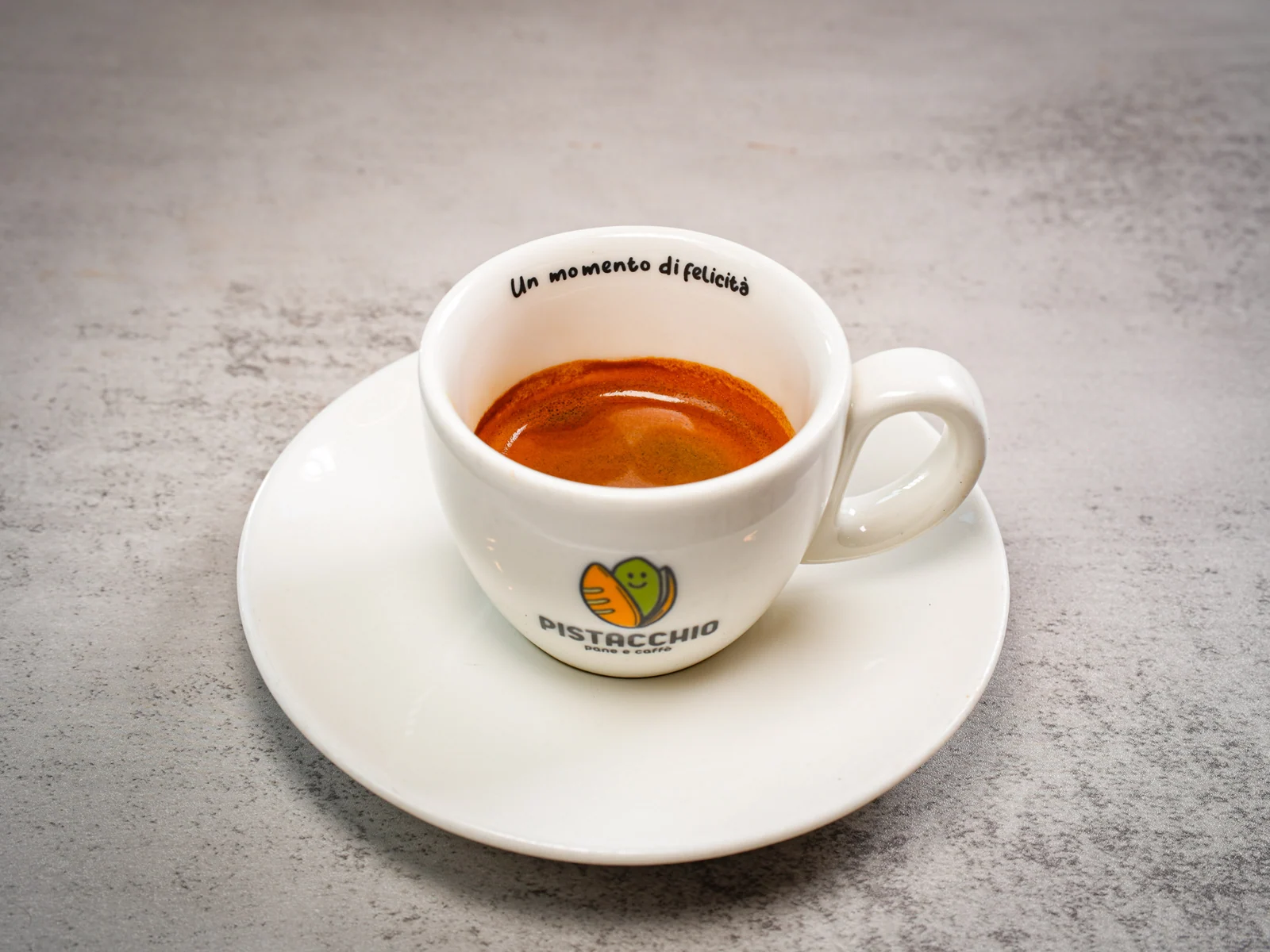
A caffè sospeso, or suspended coffee, is a Neapolitan bar custom: a customer pays for two coffees, drinks one, and leaves the second “suspended” for someone who cannot afford it. Whoever asks later gets it free. It began in the working-class bars of Naples, nobody can date it precisely, and in the 2010s it was revived and copied around the world.
How it works at the counter
The mechanics are simple, which is part of why the custom survived. Nobody needs a sign, an app or a form. Someone has had a good day, or simply feels generous. At the till they pay for two espressos and drink one. The barista keeps track. Later, someone else walks in, asks quietly whether there is a sospeso, and if there is, is served without paying.
The Neapolitan writer Luciano De Crescenzo, whose writing helped make the custom known across Italy, described it in an interview with NPR in 2013 as a cup of coffee offered to the rest of humankind. The giver never meets the receiver. Neither has to say thank you. The bar holds the gift in between.
What is documented, and what is folklore
Here the story gets thinner than the romance around it. Nobody knows when the first caffè sospeso was paid for. A 2010 account called the tradition more than a hundred years old. Some Neapolitan cafés tie it to the years after Italian unification in 1861; other writers place its real spread during the hardship of the Second World War. None of these claims rests on a dated record, and the honest answer is that the custom is old, local and undated.
What is better documented is that it faded. During Italy's postwar economic boom fewer people needed a free coffee, and the habit shrank to something people did mainly around Christmas. In 2008 a reporter for the Corriere del Mezzogiorno visited three Naples bars and found none where a sospeso had been left in at least fifteen years.
So treat any version that arrives with an exact founding year or a named inventor as folklore. It may be a good story. It is not history.
The revival, and how it left Naples
The custom came back through books and hard times. De Crescenzo published a book called Il caffè sospeso in 2008. Around 2010 and 2011 a group of Italian arts festivals formed a network under the same name, and several organizations, backed by the mayor of Naples, declared 10 December, Human Rights Day, a Suspended Coffee Day.
Then the economic crisis did the rest. NPR reported in 2013 that more than 150 cafés in Bulgaria had joined a similar scheme, that a network called Cafés Pendientes had started in Spain, and that cafés in France used a café en attente sign. A social media campaign in English carried the idea further, and versions of it turned up in Britain, Ireland, Canada, Australia and the United States. Some of the moments became news in their own right. Starbucks in Britain matched the value of suspended coffees with donations to a charity in 2013; that summer an anonymous customer at a Tim Hortons in Edmonton paid for 500 coffees, and the chain of goodwill spread to about thirty locations. In 2021 a customer in Istanbul paid for 501 Turkish coffees in one go.
The custom also came home. During the 2020 lockdowns, accounts from southern Italy describe the practice reviving among people hit by the economic hardship. Somewhere along the way it stopped being only about coffee, and the same idea was applied to food and other everyday things.
Why it could only start in a Neapolitan bar
The custom depends on things that the Italian bar happens to have. The coffee is cheap enough that paying for a stranger's cup is a small gesture, not a sacrifice. It is drunk standing up, in a minute, so nobody has to sit next to the person who paid for it. And the barista knows the regulars and the neighborhood, which is what makes the arrangement trustworthy. A sospeso left with a stranger behind the counter would just be a tip.
It also depends on the bar being something like a public room, where the counter is the place news travels. If you want to understand that rhythm, including what to order and when, we set it out in how to order coffee like a Neapolitan.
What the tradition says about the counter
A caffè sospeso only works because the thing being given is small, quick and shared by everyone. The espresso is the same cup for the lawyer and the bus driver, and it costs the same. That equality is the real Neapolitan idea inside the custom, more than the charity.
Our counter runs on the same small objects. A plain espresso, an Espresso Pistacchio with pistachio cream, a morning cappuccino with its thick layer of foam. Ordered at the counter, finished in a few minutes, the same for everyone who walks in. That is the part of Naples that travels without needing a story attached.
If you visit Naples and want to take part, ask at the till whether the bar keeps sospesi. Not every bar does, and the ones that do will know exactly what you mean. Pay for two, drink one, and do not wait around to see who gets the other. That is the whole etiquette.
On our counter: espresso bar. Every dish, one by one: our dishes.