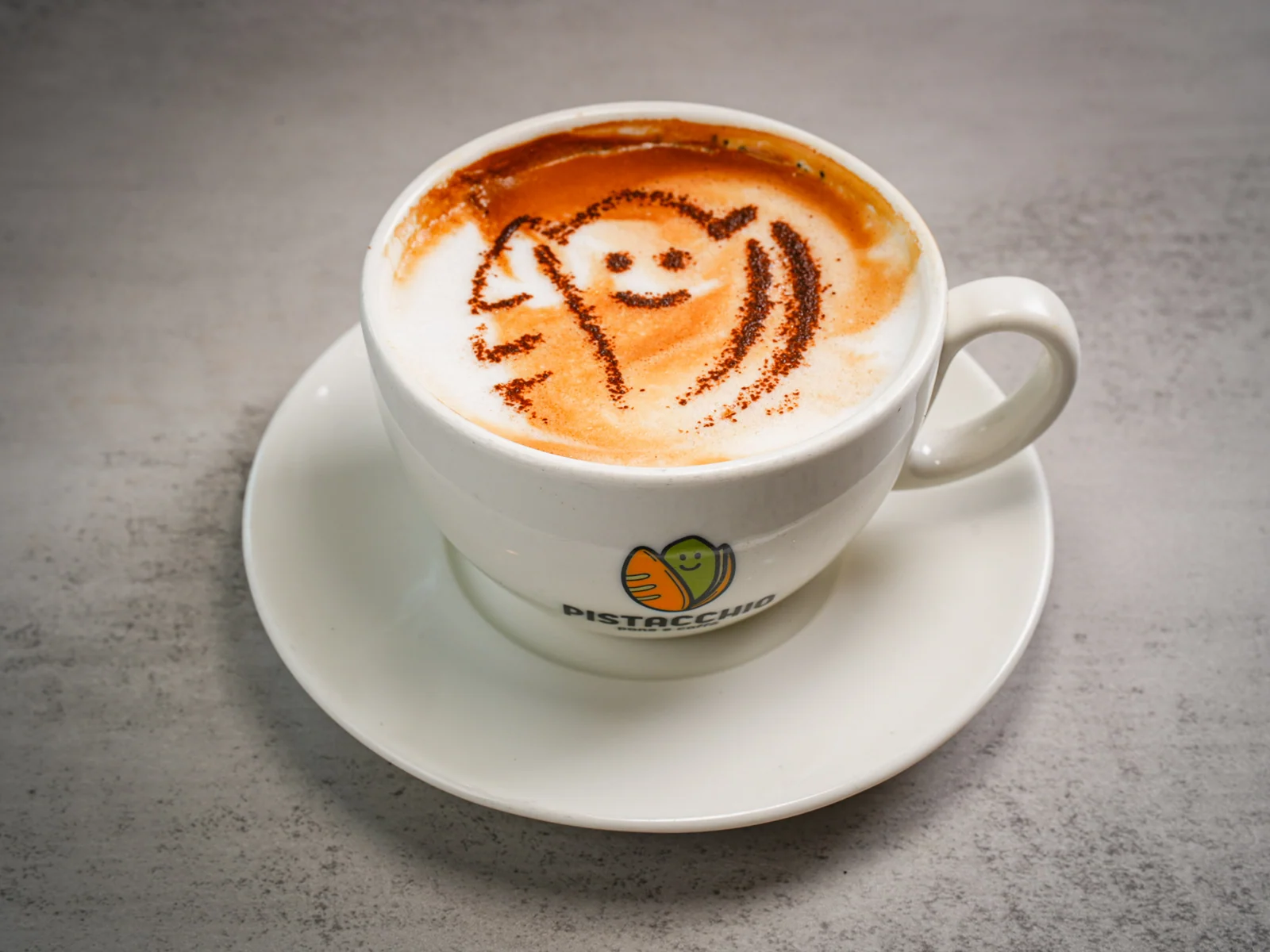
In Italy, "un caffè" means an espresso — not a cup of filter coffee. Milk drinks belong to the morning: a cappuccino before eleven is normal, and after a meal Italians switch to espresso. Everything else is detail.
First, the word that causes all the confusion
Ask for un caffè anywhere in Italy and you will be handed a small cup containing roughly thirty millilitres of espresso. That is the default. It is not a small coffee, or a strong coffee, or a special order — it is simply what coffee means.
Everything else on the board is that same shot with something done to it. Once you see the list that way it stops being a foreign language and becomes a very short set of instructions.
The whole vocabulary, in nine lines
- Espresso — the shot on its own ($3).
- Doppio — two shots in one cup ($3.50). Ours is on the board as Doble Espresso.
- Macchiato — literally "stained". An espresso marked with a spoonful of foamed milk ($3.50). It is not a large milky drink; the coffee is still in charge.
- Cortado — equal parts espresso and warm milk ($3.50). Spanish by name, and the drink most Miami palates actually want when they say "not too strong".
- Cappuccino — espresso, steamed milk and a proper cap of foam ($5.25), in roughly equal thirds.
- Latte — espresso and steamed milk, more milk than a cappuccino and much less foam ($5.75). Note that in Italy latte alone means milk; ask for one in Naples and you may well get a glass of it.
- Americano — espresso lengthened with hot water ($4). Closest to what most Americans mean by coffee.
- Affogato — espresso poured over gelato ($8.50). Technically dessert. Nobody polices this.
- Decaffeinato — decaf ($3), and no, ordering it is not a moral failing.
The one rule that actually matters
Milk is for the morning.
A cappuccino at eight is breakfast. A cappuccino at three in the afternoon is the single clearest sign that someone is not from there, and after a full meal it is close to unthinkable — the reasoning is digestive, not aesthetic: a large quantity of hot milk on top of lunch is considered heavy. What Italians drink after eating is an espresso, standing, in under a minute.
Nobody will stop you. But if you want the local rhythm, the shape of the day is milk in the morning and espresso after that.
Standing up costs less, and is the point
An Italian bar is designed around the idea that coffee is a pause, not an appointment. You come in, you order at the counter, you drink it there, you leave. The whole transaction takes a few minutes. It is why the cups are small and why there is space at the bar rather than a queue of laptops.
The custom that goes with it is caffè sospeso — the "suspended coffee" of Naples, where someone who has had a good day pays for two and leaves one credited at the bar for whoever comes in next and cannot afford it. It is several centuries old and it tells you most of what you need to know about how Neapolitans think about coffee.
Where the pistachio gets involved
Since the whole bakery is built around one nut, the espresso bar does not get to opt out. The Espresso Pistacchio ($4.50) is a shot with pistachio cream stirred through it. The Caffè del Nonno — "grandfather's coffee", a cold, thick, whipped coffee cream — comes in two versions, Nutella ($7.80) and pistachio ($8.90). In the Miami months, the Ice Latte ($9) and Ice Matcha ($9) do most of the work.
And in the specifically-not-coffee column: matcha ($6.50), matcha with strawberry ($7.50), Italian hot chocolate thick enough to stand a spoon in ($4.50), and orange juice squeezed to order ($8).
What to pair it with
The classic pairing is not a matter of taste so much as of arithmetic: Italian pastry is sweet, so the coffee is bitter. A cornetto and an espresso balance each other. A sfogliatella — all citrus, ricotta and shattering pastry — wants the same treatment. We laid out the whole case in what to order at an Italian pastry case, and the reasoning behind the pastry itself in a cornetto is not a croissant.
The espresso bar runs from eight in the morning at 188 NE 23rd Street, ten minutes from Wynwood and Downtown. The full drinks list is on the menu. Order it standing, if you have the five minutes. It genuinely tastes different that way.