Typical Italian meal times: breakfast from about 7 am, lunch between roughly 12:30 and 2:30 pm, a merenda snack in the afternoon, aperitivo from around 6 pm, and dinner rarely before 8 pm in towns and cities. The north eats a little earlier; in the south a 2 pm lunch and a 9 pm dinner are normal. Treat these as habits, not rules.
Colazione, and the coffee that follows it
Italy's official tourism site puts breakfast from 7 in the morning, with some bars and pastry shops opening earlier for people on their way to work. The meal itself is small and sweet, and it does not last; we explain what goes into it in what Italians eat for breakfast.
Because breakfast is light, the morning has a gap in it. The Treccani dictionary notes that merenda can also mean a mid-morning snack, especially the one children take to school. Adults fill the same gap with another espresso at the bar, which is small enough to fit anywhere in the day and is never treated as a meal.
Pranzo: when and how long
Restaurants generally serve lunch from about 12:30 to 2:30 pm. In the north, most people sit down between 1 and 1:30, and arriving after 2 can feel odd. In the south, 2 pm is an ordinary time for lunch, and on Sundays a family meal at home can run for two or three hours.
Restaurants follow the same clock. Many open for a couple of hours around lunch, close in the afternoon, and reopen for dinner, so a late lunch in the middle of the afternoon can be surprisingly hard to find outside tourist areas and bars.
Lunch has also kept its weight. In regional tables built from Istat survey data, a majority of people in several northern regions still name lunch, not dinner, as their main meal of the day: around 70 percent in Trentino-Alto Adige, close to 60 percent in Piedmont. On a working day that does not always mean a long sit-down. It can be a sandwich at a bar counter, a habit we describe in the difference between a panino and a panini.
The long afternoon, and why merenda exists
If lunch ends around two and dinner starts at eight or later, the afternoon is six hours long. Italy's answer is the merenda, the four o'clock snack of childhood that adults never fully gave up: bread and something on it, a slice of tart, a cookie, gelato when it is warm. It has its own history and its own vocabulary, which we wrote up in merenda, the Italian afternoon snack.
An afternoon espresso belongs here too. After lunch most Italians switch from milky coffee to a short, strong espresso.
Aperitivo, then cena
The aperitivo, a drink with something salty to eat alongside it, runs roughly from 6 pm until dinner. It is a bridge, not a meal, even in the cities where the snacks have become generous.
Dinner is the meal that most surprises visitors. Restaurants usually serve from about 7:30 pm, but in most towns and cities they will not take a booking before 8 or 8:30, and many keep the kitchen going until 11. At home, dinner often starts around 8. In the north some families eat at 7:30; in the south 9 pm is not unusual, and in summer everything slides later still, with tables filling at 9 or 10 and people lingering outside well past midnight.
Habits, not laws
None of these hours is fixed, and Italians would be the first to say so. The historian Alessandro Barbero has argued that meal times are a cultural construction, shifting not only between countries but between social classes and centuries; the late Italian dinner is not some ancient constant. Today the hours move with work, school, region and season. A family in Turin and a family in Naples can both be eating a perfectly normal dinner an hour and a half apart.
What does stay fixed is the shape: a light morning, a real meal in the middle of the day, a small bridge in the afternoon, and dinner when the day is over. If you keep that shape, the exact hour matters less than visitors fear.
Mapping the Italian day onto a Miami counter
We keep Italian bar hours more than Italian restaurant hours: 8 am to 7:30 pm Monday to Saturday, 8:30 am on Sunday. That covers colazione, lunch, merenda and the start of aperitivo, and stops before dinner.
- 8 to 10 am: a pastry and a coffee, the way the morning starts in Naples.
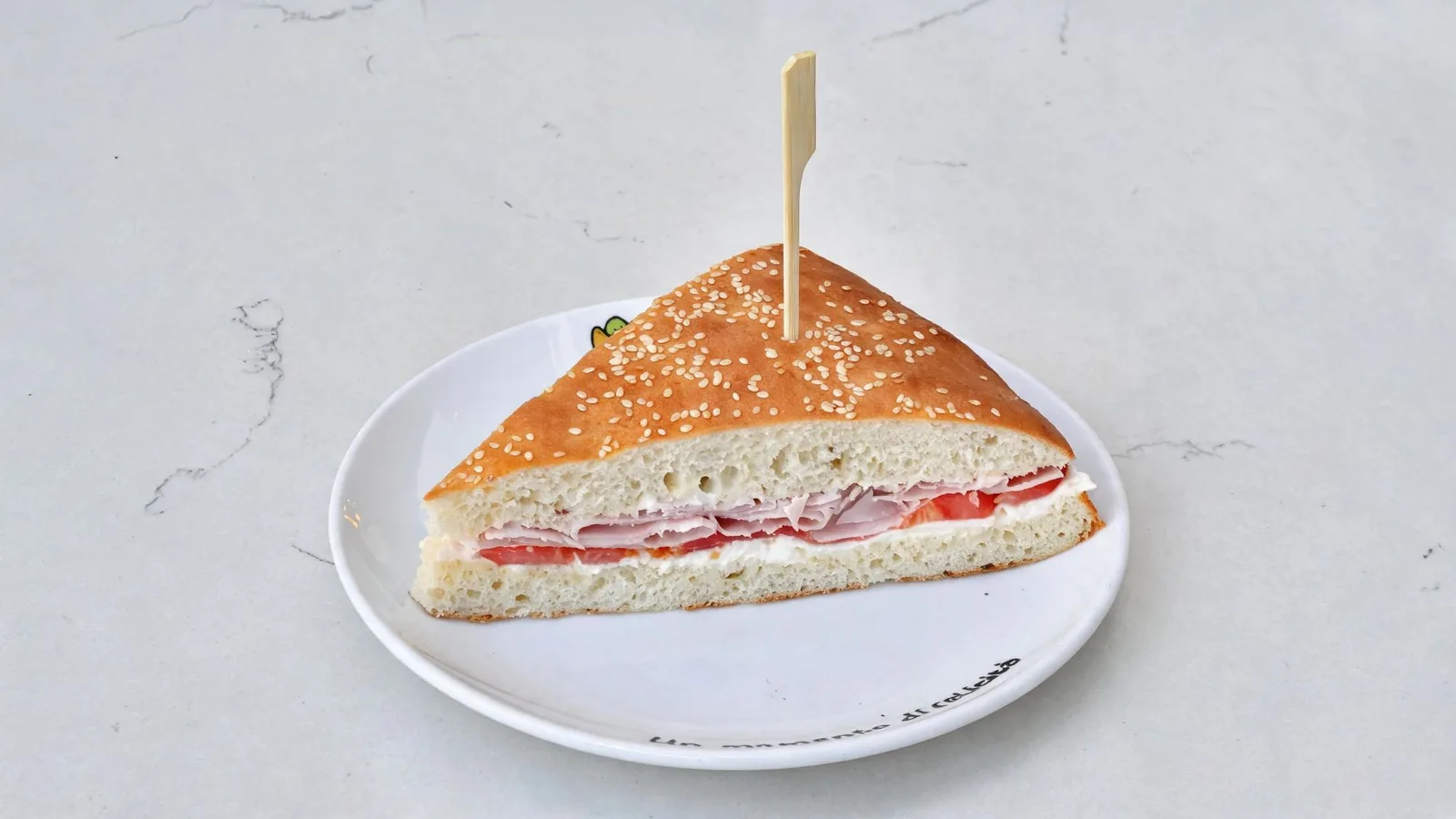
- 12:30 to 2:30 pm: lunch on bread. The sesame-topped schiacciata, filled with cotto, caprese or tuna, is the kind of thing an Italian office worker eats standing at a bar.
- 4 to 5 pm: merenda. A cookie or a slice, and if you need the second wind, an Espresso Pistacchio, espresso with pistachio cream.
- 6 to 7:30 pm: the hour when Italians start thinking about aperitivo, and when Miami traffic gives you a good reason to stop for one more coffee.
Dinner at eight is yours to arrange. A Tiramisù Classico to take home for it is an Italian enough way to end the day.
On our counter: the full menu. Every dish, one by one: our dishes.