Merenda is the Italian snack eaten between lunch and dinner, usually around 4 or 5 pm. It started as a children's ritual: bread with olive oil, bread with butter and sugar, a slice of jam tart, gelato in warm weather. The word comes from the Latin for “things to be earned”, and plenty of adults still feel they have earned one.
A word that means you deserved it
The Treccani dictionary traces merenda to the Latin merenda, from the verb merere, to deserve: literally, things to be earned. Its modern definition is plain. A light, short meal between lunch and dinner, usually of foods that need no cooking, eaten above all by children. The same word can mean the snack a child takes to school in the morning, and it can mean the food itself, as in “what did you bring for merenda”.
Notice what the definition leaves out: no cooking, no table, no fixed menu. A merenda is something you can hand to a child at the school gate and forget about.
The idea of earning it has stuck. Gambero Rosso describes merenda as a break for anyone who deserves one: students, people working long afternoons, anyone who needs to make it to a late dinner.
What went on the bread
The oldest merende were country food, and most of them start with a slice of bread. A document from Italy's association of olive oil towns lists the peasant versions: bread with oil, bread with tomato, bread with whatever cured meat or cheese was in the house. The sweet one, and the favorite, was pane, burro e zucchero, bread spread with butter and sprinkled with sugar. Some grandparents still remember bread dipped in red wine and sugared, which no modern parent would hand to a ten-year-old.
Over time the list widened: a slice of crostata (jam tart), a piece of ring cake, ricotta with honey, a small panino, bread with a piece of dark chocolate pushed inside. Packaged snacks and chocolate-hazelnut spread came later. In summer, children in Rome and other cities get their gelato in a cup or a cone, and that counts too.
Merenda, region by region
Like everything else on the Italian table, the merenda changes with the map. In the Garfagnana, in the hills of northern Tuscany, children grew up on necci, thin crêpes of chestnut flour. In Sicily a piece of sfincione, the thick, soft Sicilian pizza, does the job. In Abruzzo the old favorite was pane maritato, bread soaked in egg and fried in olive oil, a local cousin of French toast that children and adults both claimed.
What links them is thrift. Merenda was usually made from what was already in the kitchen: yesterday's bread, the end of the ricotta, a little oil, a handful of sugar. It was rarely something you went out to buy.
Why four o'clock
Merenda makes sense once you see the Italian day. Lunch usually ends by two or half past, and dinner rarely starts before eight, later in the south. That leaves a long afternoon with nothing in it, and children in particular do not last six hours. The snack fills the gap without spoiling dinner, which is why it is small and why it is usually sweet or bready rather than a second lunch. We set out the whole timetable in our guide to Italian meal times.
Adults never gave it up
Nobody announces it, but grown Italians keep the habit. It just changes clothes. The child's bread and sugar becomes a pastry and an espresso at a bar, a biscuit with a coffee at the office, a gelato on the walk home. The timing stays the same, and so does the feeling that the afternoon is long and a small reward is fair.
Packaged merende changed the habit without ending it. Italian supermarkets have whole shelves of merendine, individually wrapped snack cakes named after the habit, and an Italian adult can usually tell you which one was in their school bag. The homemade versions survived next to them.
Merenda is also one of the few Italian food customs with no rules attached. There is no wrong drink, no wrong hour within reason, no etiquette to break. That is part of its charm, especially next to the strict grammar of the Italian breakfast.
An afternoon merenda at our counter
We are open until 7:30, so the merenda hour falls squarely inside our day. A few ways to do it properly:
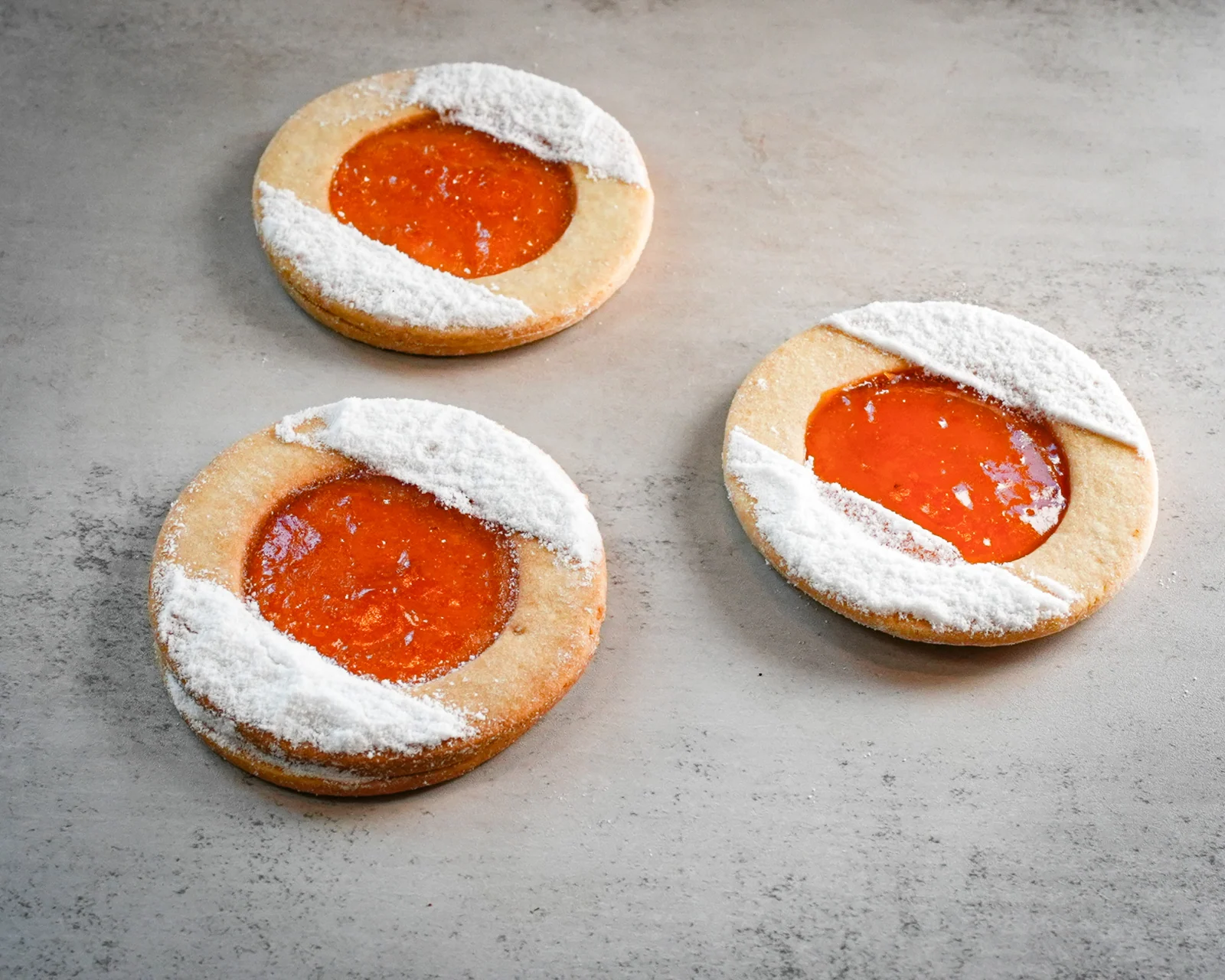
- Cookies and coffee. Our Occhio di Bue and Biscotto Amarena cookies, baked every morning: apricot, chocolate or pistachio, or the amarena cherry and chocolate one, which is sweet-tart.
- Something savory. A Mini Margherita, tomato, fresh mozzarella and basil on a pizza for one, is the closest we come to bread with tomato.
- A pastry. The Pasticciotto Crema e Amarena, a shortcrust shell with vanilla custard and a heart of amarena cherry, is the size of a merenda and no bigger.
- Gelato, Miami-style. A cup of pistachio gelato, or the Brioche col Gelato if you are hungrier than a cup.
Or take the Neapolitan route: a sugar-dusted graffa and a short espresso, eaten at the counter in five minutes. It is the grown-up version of bread and sugar, with better coffee.
Add an espresso if you are an adult with a long evening ahead. That is what the word was for.
On our counter: affogato and the pastry case. Every dish, one by one: our dishes.