Naples street food is food you eat walking: pizza a portafoglio folded into quarters, deep-fried pizza, the cuoppo (a paper cone of fried morsels), frittatina di pasta, and taralli with lard, pepper and almonds. The bakeries add their own: sfogliatella, the sugared graffa, the parigina sold by the slice, and stuffed bread rolls. Some of that we bake in Miami; the fryer side we leave to Naples.
Pizza, folded so you can walk with it
The oldest street version of pizza in Naples is the pizza a portafoglio, the wallet pizza: a small round, folded in half and then in half again. Food writers give two reasons for the double fold. The first keeps the topping from sticking to the next pizza on the stack; the second lets you eat it upright without wearing the tomato. It was sold cheaply from stalls at pizzeria doors, which is a large part of why pizza was long considered food for the poor. Gambero Rosso, citing the historian Antonio Mattozzi, counts 54 pizzerias in Naples in 1807 and around a hundred through the nineteenth century.
Then there is pizza fritta, folded around its filling and deep-fried instead of baked, often with ricotta and provola inside. Its little sister, the montanara, is a small fried disc of dough topped with tomato and grated cheese. Neither is delicate, and neither is meant to be. Somewhere between pizza and sandwich sits the panuozzo, pizza dough baked as a small loaf, split and filled.
The friggitoria: cuoppo, frittatina, taralli
A friggitoria is a fry shop, and its signature is the cuoppo: a cone of paper filled with whatever came out of the oil, from small fried dough balls and croquettes to fish in the seaside versions. The test of a good one is that it is dry enough to eat while you walk without your hands paying for it.
The frittatina di pasta is the most Neapolitan item in the case: pasta bound with béchamel, usually with peas or ham, shaped into a thick disc and fried. Guides insist on eating it fresh, which is good advice for anything that comes out of a fryer. Next to it you will usually find crocchè, potato croquettes, and zeppulelle, small balls of fried dough, sometimes with bits of anchovy or vegetables folded in.
Taralli are the snack for the seafront. The Neapolitan kind is a ring of bread dough enriched with sugna (lard) and a lot of black pepper, with whole almonds pressed in. The usual account, attributed to the writer Matilde Serao, says bakers of the late eighteenth century invented them to use up scraps of risen dough. Gambero Rosso describes eating them along Via Caracciolo toward Mergellina with an ice-cold beer.
The bakery side of the street
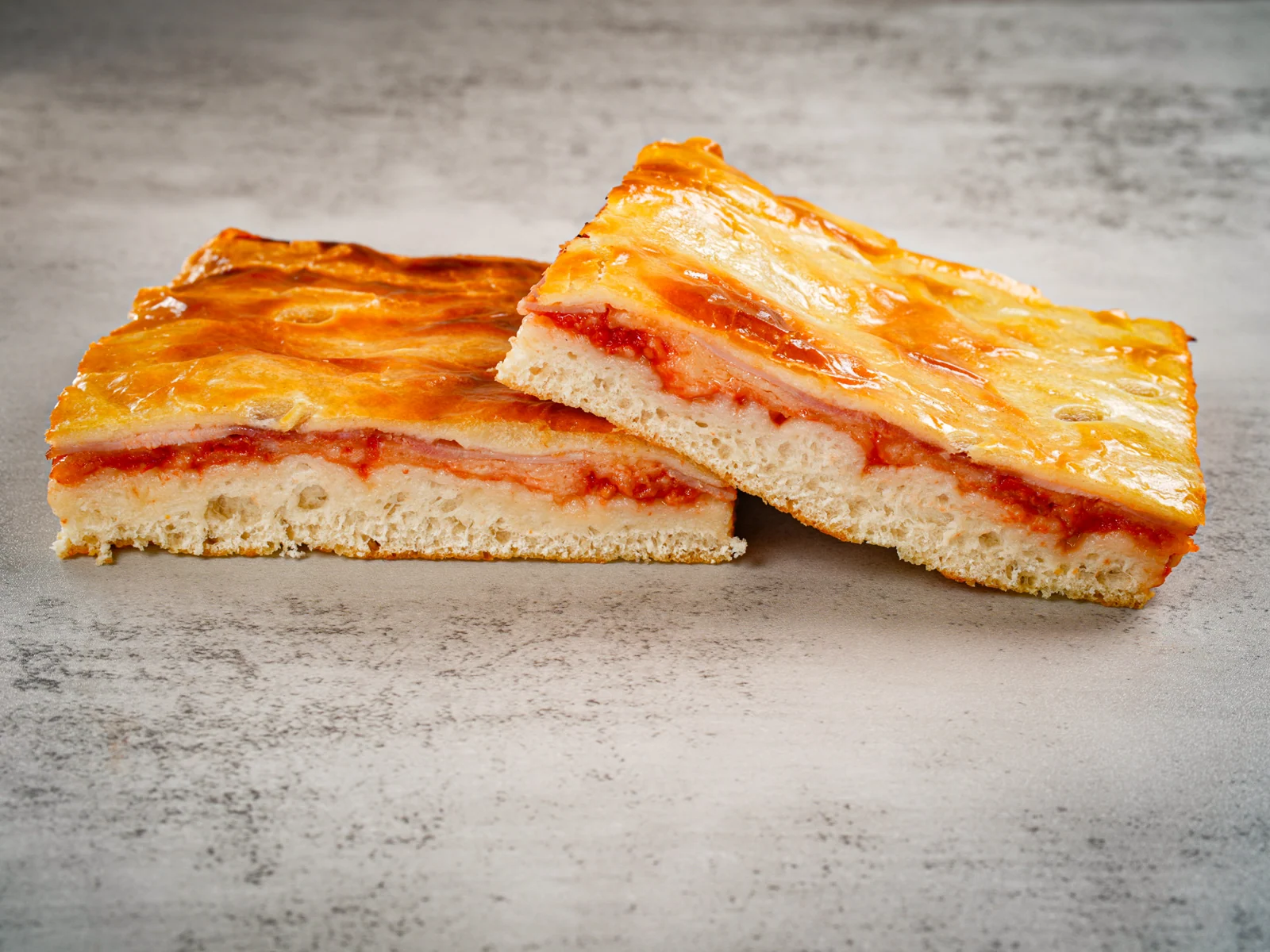
Not everything is fried. Neapolitan bakeries and rosticcerie keep trays of savory things warm all day, sold by the slice. The parigina is the one visitors find hardest to place: a layer of pizza-style dough, a filling, and a lid of puff pastry. Its original filling was tomato, provola and cooked ham, and it is cut in slices from a large tray. Older versions closed it with a second layer of bread dough instead of pastry. The name sounds French, and one Neapolitan baker argues it actually comes from pa' riggina, “for the queen”; treat that as a good story rather than settled history.
Next to it you find the panino napoletano, a soft roll of enriched dough baked with cured meat and cheese rolled inside, from the same family as the Easter breads tortano and casatiello. On the sweet side of the counter sit the sfogliatella and the graffa, a ring of fried dough rolled in sugar that goes with a coffee at any hour. We cover the sweet pastries at length in our guide to Neapolitan pastry.
Lunch without a table
What ties all this together is posture. A great deal of everyday eating in Naples happens on foot or at a counter: a slice from the rosticceria tray at noon, a folded pizza from a stall, a cuoppo shared between two people walking. Nothing on the list needs a fork, and almost all of it is sized to be finished before it cools. It is the same logic as the coffee bar, applied to lunch.
What you can get at our counter, and what you can't
We are a bakery and espresso bar, so we make the bakery half of this list, baked here every morning. You can get:
- The parigina, our layered pastry of soft dough and flaky crust filled with prosciutto cotto, melted mozzarella and San Marzano tomatoes, sold al taglio.
- The Panino Napoletano: golden rolls baked with cured meat and cheese melted into the dough.
- The sfogliatella riccia, the shell-shaped one with crisp layers and ricotta-citrus filling.
- The graffa, fried and finished with a dusting of sugar.
- A Mini Margherita or Marinara, a pizza for one. It is not folded into a wallet, but it is the right size to eat with your hands.
If you want something closer to a proper sandwich lunch, Il Rustico on ciabatta, with roasted porchetta, smoked provola and golden potatoes is built for exactly that.
What you cannot get here: pizza fritta, the cuoppo, frittatine and taralli. We would rather send you to Naples for those than make a version that needs explaining.
On our counter: catering. Every dish, one by one: our dishes.