Graffa Napoletana, the Neapolitan Doughnut
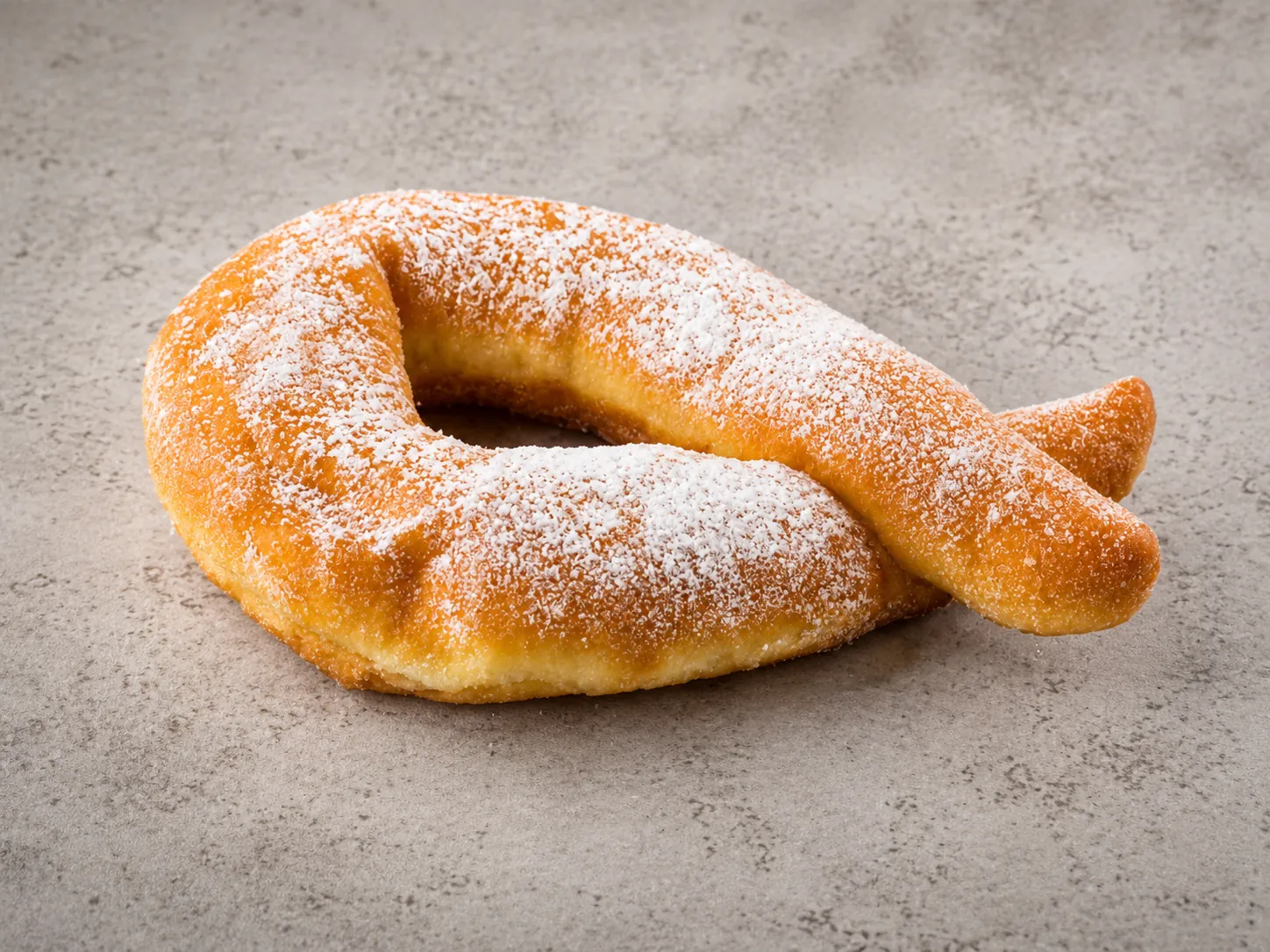
Golden fried dough, soft and airy inside, a dusting of sugar, and a coffee to go with it.
In short
The graffa napoletana is the doughnut of Naples: dough fried until golden, soft and airy inside, finished with sugar and eaten with a coffee. At Pistacchio in Edgewater, Miami, we make ours in-house and keep it classic: golden outside, airy inside, a dusting of sugar on top. Pick one up at the counter or order it through Uber Eats.
- Where
- 188 NE 23rd St, Edgewater
- Order
- At the counter or Uber Eats
At a glance
- What it is
- Fried dough, soft and airy inside, dusted with sugar
- Roots
- Naples, by way of the Austrian krapfen
- Best with
- Cappuccino in the morning, espresso later
- Where
- In-store and on Uber Eats
A name that came from the north
The word is usually traced to krapfen, the fried dough of the German-speaking world. The common explanation is that the recipe reached Naples during the years of Austrian rule in the early eighteenth century, and that Neapolitans then did what they tend to do with imports: changed it until it was theirs.
The changes are what make a graffa a graffa. Where a krapfen is usually a filled bun, the Neapolitan version is traditionally a ring, left unfilled and rolled in sugar. Traditionally, too, cooks in Naples work boiled potato into the dough, which is a large part of why the homemade kind is so tender. Recipes differ from one bakery to the next: ours is made without potato.
So, is it a doughnut?
Close enough that the word helps, different enough that it is worth saying how. An American cake doughnut is dense and often glazed; a yeast-raised one is chewier and usually iced. A graffa sits on the soft end of that scale: light, a little springy, with sugar rather than glaze, and it is at its best within a few hours of frying. It is a fresh pastry, not a box-of-a-dozen one.
Standing up, with sugar on your fingers
In Naples you eat it on your feet at the bar, with coffee, and you do not worry about the sugar on your shirt. That habit of eating on the move runs all through the city, from the bars to the fry shops, and our piece on Naples street food walks through the rest of it.
In the morning, the natural partner is a cappuccino, whose milk softens the sweetness. Later in the day, switch to an espresso. And if you like fried pastry but want cream inside, look at the fried zeppola, which is the graffa's fancier relative.
Whatever you pair it with, eat it soon after buying. A graffa that waits until evening is still pleasant, but the tender, just-fried texture is the reason to order one, and it does not keep the way a cookie does.
Keep reading: What Do Italians Eat for Breakfast?
Allergens
Ask us before you order: call (786) 536-7165 or ask at the counter, and we will tell you exactly what is in it, including cross-contact.
Questions people ask
What is a graffa?
A graffa is a Neapolitan fried pastry, soft inside and coated in sugar, usually eaten in the morning with coffee. Its name is generally traced to the German-speaking krapfen.
Is it like a doughnut?
Yes, it is Naples' version of one. It is softer and airier than a typical American doughnut, finished with sugar instead of glaze, and traditionally left unfilled.

Find us in Edgewater
A few steps from Biscayne Boulevard, with tables inside and on the terrace.
- Address
- 188 NE 23rd Street, Miami, FL 33137
- Hours
- Monday to Saturday 8:00 am – 7:30 pm, Sunday 8:30 am – 7:30 pm
- Phone
- (786) 536-7165
 Sfogliatella
 Pistachio coffee