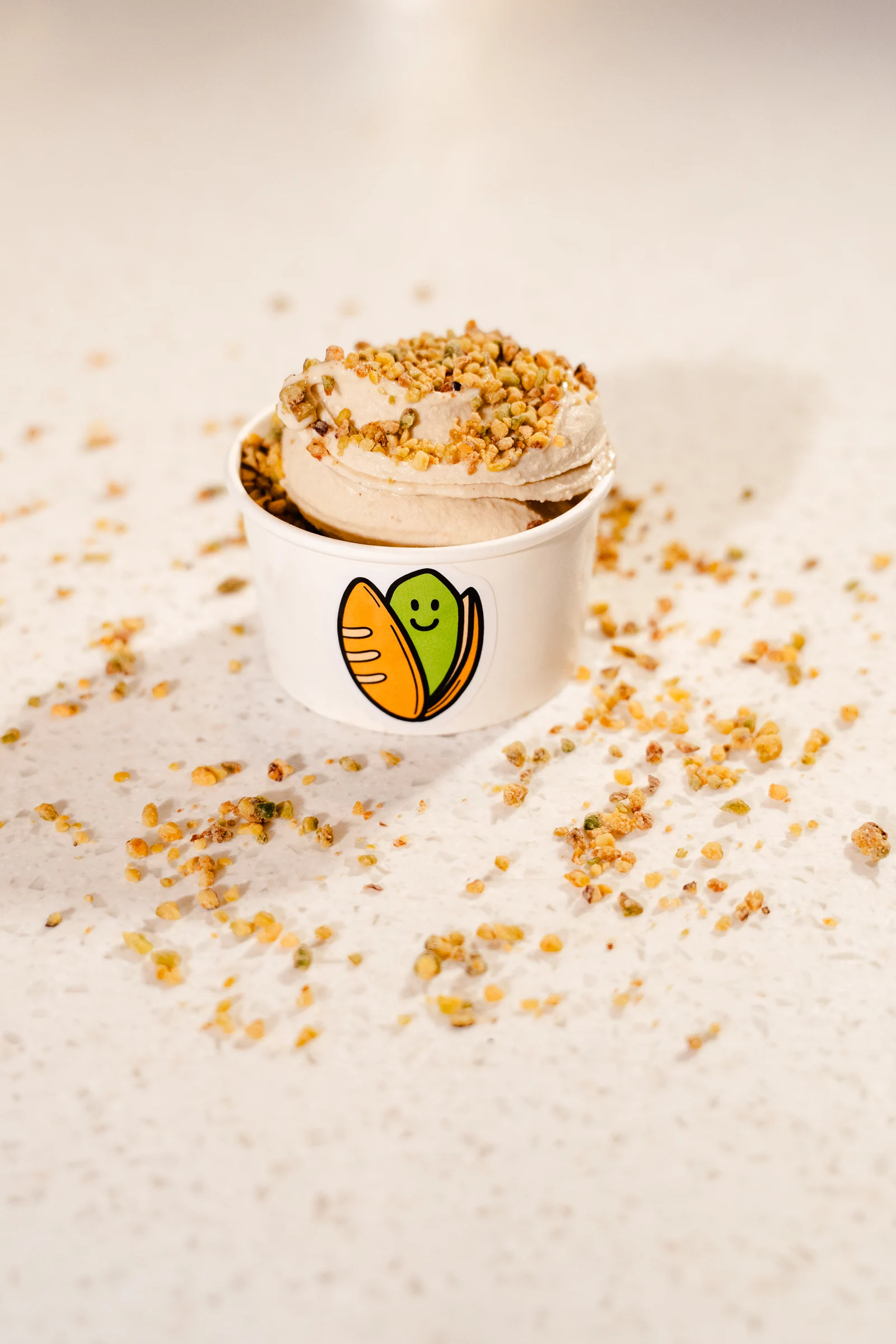
Gelato and ice cream are made from the same ingredients in different proportions. Gelato typically uses more milk and less cream, is churned more slowly so it holds less air, and is served a few degrees warmer. The result is denser and softer, with less fat coating your tongue, so the flavor of gelato comes through more intensely.
Start with the base: milk against cream
Both begin as a mix of milk, sugar and, usually, some cream. Ice cream leans on the cream. In the United States, anything sold as ice cream must by law contain at least 10 percent milkfat, and premium brands go well past that. Gelato leans on the milk instead and typically lands somewhere around 4 to 9 percent fat, though recipes vary from shop to shop.
Eggs are a second split, though a messier one. Many American ice creams, the custard style, are built on egg yolks, while plenty of Italian gelato flavors use none and get their body from milk, sugar and the main ingredient itself. Gelato alla crema, on the other hand, is made with yolks, so treat this as a tendency rather than a rule.
Fat matters for flavor in a way that surprises people. Butterfat coats the tongue, which feels luxurious but also muffles whatever is underneath. Take some of it away and the pistachio, the hazelnut or the coffee arrives faster and louder. That is the first reason gelato tastes more of whatever it is.
Then the air
Every frozen dessert is churned as it freezes, and churning beats in air. The trade calls the extra volume overrun. Ice cream is usually churned fast and can take on a great deal of it; the federal standard sets a minimum weight per gallon, which in practice caps how much air can be sold as ice cream. Gelato is churned more slowly and typically holds much less.
Less air means a denser scoop. Fill two cups to the same level and the gelato weighs more. It also means each spoonful carries more ingredient and less nothing, the second reason the flavor hits harder. You can see the difference when a cheap tub melts on the counter and visibly shrinks: much of what you paid for was air.
And finally, the temperature
Ice cream is served hard, straight from a deep freeze, which is why it takes a heavy scoop and a strong wrist. Gelato is kept and served noticeably warmer, so it stays soft enough to be worked with the flat paddle you see behind gelato counters across Italy.
Cold numbs the tongue. A few degrees sounds trivial, but taste picks up far more at the warmer temperature, and the softer texture melts sooner in the mouth, releasing flavor faster. Add the three together: less fat in the way, less air thinning it out, less cold dulling it. None of the differences is dramatic on its own. Together they are why a spoonful of good gelato can taste like a concentrate.
Is gelato healthier?
Usually a little lighter, and it is fair to stop there. Less cream generally means less fat and fewer calories per scoop than a premium ice cream. But gelato still contains a good deal of sugar, which helps keep it soft at serving temperature, and a dense scoop packs more into the same space. Treat it as a different dessert, not a diet one.
One more thing worth knowing in the US: the federal standards that define ice cream say nothing about gelato. The word on a supermarket carton is a description, not a guarantee, and a product labelled gelato can be built almost any way its maker likes. The reliable test happens at the counter, with your eyes and a tasting spoon.
How to spot good pistachio gelato
Pistachio is the flavor where shortcuts show most, because the real nut is expensive and a cheap version is easy to fake with coloring and flavoring. Three checks before you order:
- The shade. Ground pistachio in milk turns a muted olive or khaki, often with a brownish tint. A bright, even mint green has been colored.
- The display. Gelato piled into tall, sculpted mounds has usually been stiffened to stand up like that. Good gelato tends to sit flat, often in covered metal tubs, because it is too soft to heap high. Take this as a rule of thumb, not a law.
- The taste. Real pistachio is nutty, slightly savory and only moderately sweet. If the first impression is of marzipan, the flavor came from a bottle.
For the nut itself, where the prized Sicilian crop grows and how to read a label, see our article on real versus fake pistachio.
Where to taste the difference in Edgewater
At our bakery in Edgewater, Miami, the pistachio gelato is made in-house from a base our menu describes as Sicilian pistachio paste with fresh whole milk, which puts it firmly on the milk side of this page. It comes three ways. A plain cup, for judging it on its own terms. A Brioche col Gelato, the Sicilian habit of eating gelato inside a soft, split brioche bun. Or drowned under a shot of hot espresso as an affogato.
Go for the cup or the brioche if you want the gelato itself, and the Affogato al Pistacchio if you want it with coffee. Taste it next to the last ice cream you remember, and decide for yourself which side of this argument you are on.
On our counter: Caffè del Nonno and pistachio cream. Every dish, one by one: our dishes.