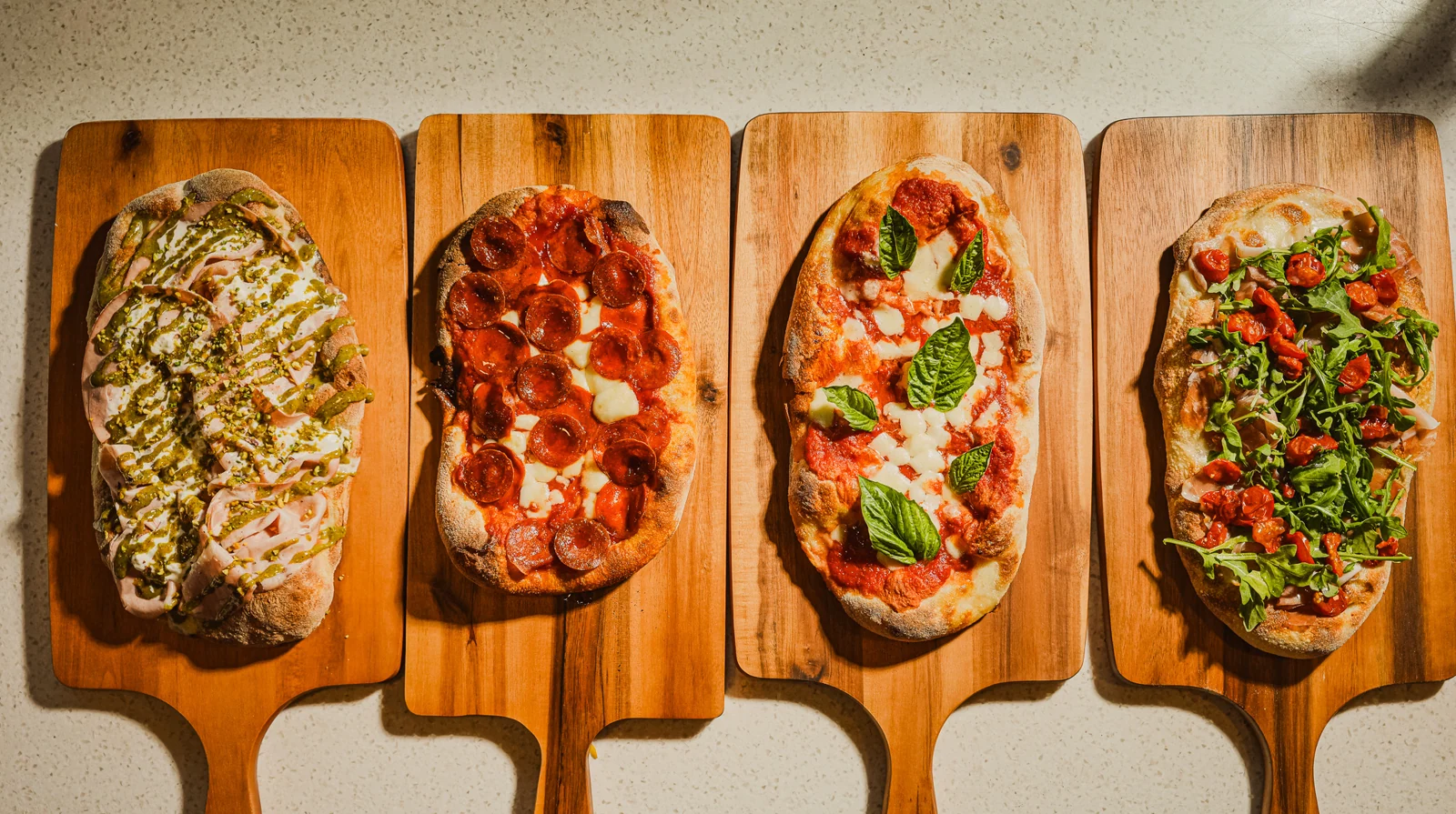
Pinsa romana is an oval flatbread made from a blend of wheat, rice and soy flour, hydrated to around 80% and fermented slowly for anywhere from two to five days. Compared with pizza it is crisper at the edge, lighter in the middle, and markedly easier to digest.
The shape is the first clue
Pizza is round because it is spun. Pinsa is oval because it cannot be. The dough holds so much water that throwing it is out of the question — it is pressed and stretched by hand into a rough oval, which is why no two are the same shape and why the edge comes out irregular and blistered rather than neat.
The name is older than the argument. Pinsere is Latin for to press or to flatten, and the word points back to the flatbreads of ancient Rome. The modern pinsa is a contemporary product with an old name, and Romans are quite happy to tell you it is not pizza and was never trying to be.
Three flours instead of one
A pizza dough is wheat. A pinsa dough is a blend, and each part is there for a reason:
- Wheat flour — structure, and enough gluten to hold the whole thing together.
- Rice flour — lightness. It absorbs water without building gluten, which is what keeps the crumb open and airy.
- Soy flour — crispness and colour, and it helps the crust hold its bite instead of going leathery as it cools.
Add a sourdough starter, and the result is a dough with less gluten and more protein than a standard pizza base.
Water, and a great deal of it
Hydration is the percentage of water relative to flour, and it is the number that decides the texture. A typical pizza dough sits somewhere around 50 to 60%. A pinsa runs near 80%.
That extra water is what produces the open, cloud-like interior. It is also what makes the dough difficult: at 80% it is slack, sticky and unwilling to be handled, which is exactly why it has to be pressed rather than thrown.
And then you wait
This is the part that does not show up on the plate but decides how you feel two hours later. Pinsa dough ferments cold for anywhere from 48 to 120 hours. Neapolitan pizza dough typically gets a fraction of that.
During that long cold rest, the yeast and the starter break down starches and proteins that your stomach would otherwise have to deal with. The fermentation essentially finishes before the dough ever meets the oven. That is the whole basis of the claim that pinsa sits more lightly — not a marketing line, just enzymes given enough time to do their work.
A pinsa ordered at one o'clock was mixed on Saturday. The waiting is not patience for its own sake; it is most of the recipe.
Pinsa, al taglio, Neapolitan: three different things
These get used interchangeably on menus and they should not be. All three come out of our oven, and they are not variations on one idea.
- Pinsa romana — oval, individual, three flours, very high hydration, days of fermentation. Crisp shell, airy middle. Eaten as your own plate.
- Pizza al taglio — Roman, baked in long rectangular trays, sold by the cut and priced by weight. The base is thicker and more focaccia-like, and the point of it is speed: you say how big a piece you want, they cut it, they weigh it, you eat it standing.
- Neapolitan pizza — round, wheat flour alone, a soft and pliable base, blistered in seconds in a very hot oven. Eaten with a knife and fork because the centre is deliberately wet.
If you grew up on one of them, the other two will feel wrong for about a minute. Then they will just feel different, which is the point.
So what does it actually taste like
Crisp at the edge, in a brittle way that crackles rather than bends. Soft and full of irregular holes inside. Lighter than it looks — a whole pinsa is less food than a whole pizza of the same footprint, because so much of it is air. And because the dough has fermented for days, it tastes of something on its own, before you put anything on top of it.
What to order, and what else the oven does
Ours come out of the Edgewater oven through the day. The Margherita ($12) is the plain test case — order it first if you have never had pinsa, because there is nowhere for the dough to hide. Then the Regina ($16), the Pepperoni with hot honey ($14), and the Pistacchiona ($16), which is what happens when a bakery built around one nut gets its hands on a flatbread.
Alongside the pinse, the same oven turns out Roman-style al taglio — pizza baked in trays and sold by the cut, which is a different thing again: the Parigina ($8.50) and the Marinara ($6.50). And there is a Mini Margherita ($6.50) for one person and a short lunch break.
The full list lives on the menu, and the rest of what the oven does — bread, focaccia, the overnight ferment — is on the bakery page.